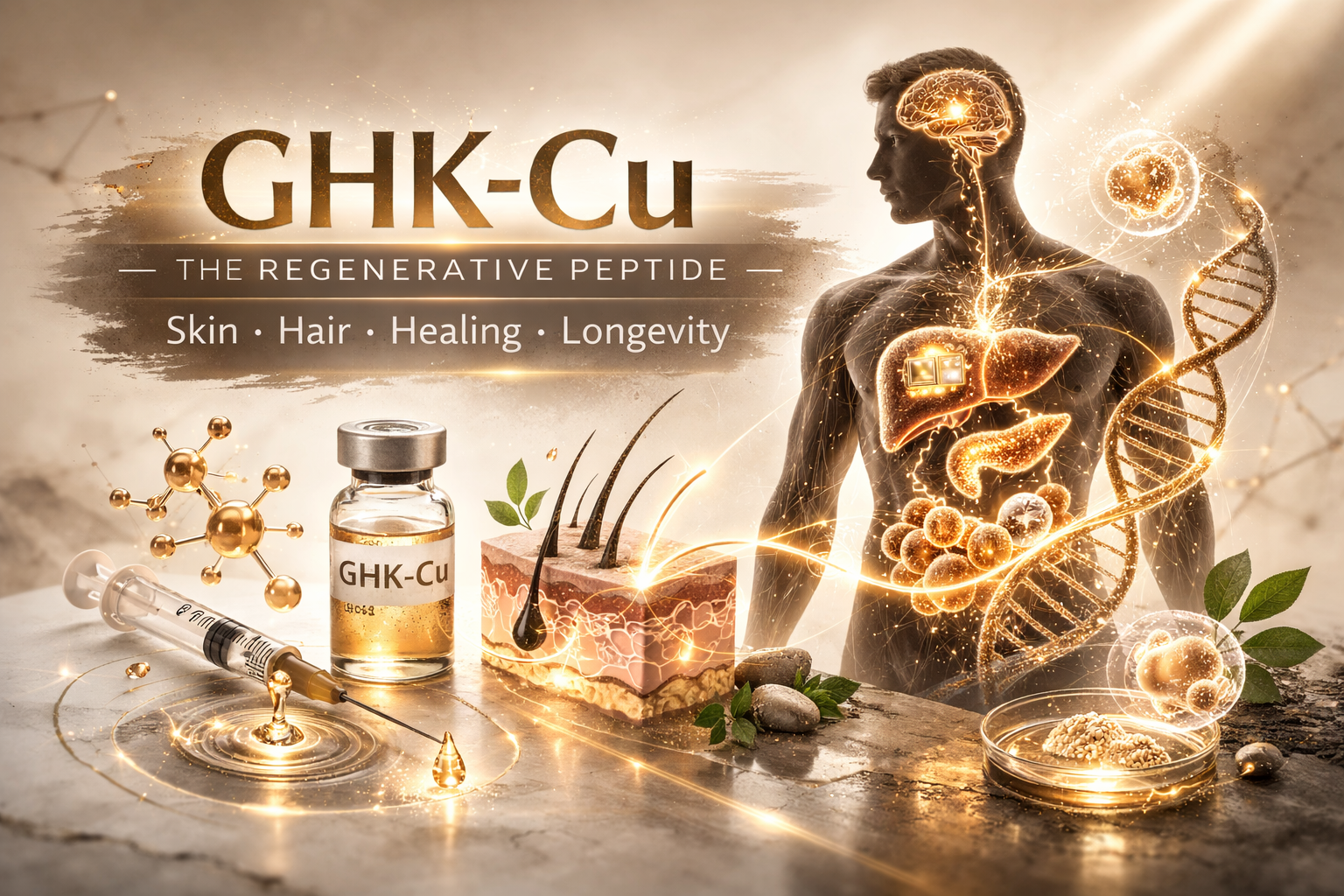
GHK-Cu: The Regenerative Peptide Transforming Skin, Hair, Healing, and Longevity.
GHK-Cu: The Regenerative Peptide Transforming Skin, Hair, Healing, and Longevity
In the world of biohacking and regenerative medicine, some molecules create hype — and some quietly reshape biology.
GHK-Cu (Copper Peptide) belongs to the second category.
First identified in human plasma decades ago, GHK-Cu is not a synthetic trend molecule. It is a naturally occurring peptide that plays a critical role in tissue repair, collagen synthesis, inflammation control, and cellular regeneration.
Today, advances in peptide science have brought GHK-Cu back into focus — not just for skin and hair, but for whole-body regenerative health.
What Is GHK-Cu?
GHK-Cu is a tripeptide bound to copper (Glycyl-L-Histidyl-L-Lysine + Copper).
It is naturally present in human blood, saliva, and urine — and its levels decline with age.
This decline is not cosmetic. It correlates with:
• Reduced collagen production
• Slower wound healing
• Increased inflammation
• Thinning skin and hair
• Reduced tissue repair capacity
In simple terms:
GHK-Cu is part of the body’s built-in regeneration system.
Why GHK-Cu Is More Than a “Skin Peptide”
While GHK-Cu is widely discussed in skincare, its biological actions extend far deeper.
Research shows that GHK-Cu influences gene expression — turning on genes involved in repair and turning down genes associated with inflammation and tissue breakdown.
This is why it’s gaining attention in regenerative, longevity, and biohacking medicine.
What Does GHK-Cu Actually Do in the Body?
1. Skin Regeneration & Collagen Production
GHK-Cu:
• Stimulates collagen and elastin synthesis
• Improves skin thickness and firmness
• Enhances skin barrier repair
• Reduces fine lines and signs of ageing
Unlike cosmetic fillers, GHK-Cu works by supporting the skin’s own regenerative machinery.
2. Hair Health & Follicle Support
GHK-Cu supports hair health by:
• Improving blood flow to hair follicles
• Reducing scalp inflammation
• Supporting follicle signalling pathways
• Strengthening the hair shaft
This makes it relevant for hair thinning, shedding, and scalp health, especially when combined with regenerative protocols.
3. Anti-Inflammatory & Tissue Repair Effects
Chronic inflammation disrupts healing and accelerates ageing.
GHK-Cu:
• Modulates inflammatory cytokines
• Supports faster wound healing
• Improves tissue remodelling
• Helps repair damaged skin and connective tissue
This is why it has been studied in wound healing and post-injury recovery.
4. Cellular & Gene-Level Regeneration
One of the most fascinating aspects of GHK-Cu is its effect on gene expression.
Studies suggest it can:
• Activate genes linked to tissue repair
• Suppress genes associated with inflammation and fibrosis
• Support healthier cellular communication
This positions GHK-Cu not just as a cosmetic peptide, but as a cellular signalling molecule.
5. Anti-Oxidant & Longevity Support
GHK-Cu also plays a role in:
• Neutralising oxidative stress
• Supporting antioxidant enzyme activity
• Protecting cells from environmental and metabolic damage
Over time, this contributes to healthier ageing and tissue resilience.
Why GHK-Cu Is Gaining Momentum in Biohacking
Modern biohacking is moving away from:
• Over-stimulation
• Aggressive interventions
• Short-term fixes
And toward:
• Supporting natural repair mechanisms
• Working with biology, not against it
• Restoring youthful signalling patterns
GHK-Cu fits perfectly into this philosophy.
It doesn’t override the body. It reminds the body how to repair itself.
Different Ways GHK-Cu Is Used Today
Depending on the goal, GHK-Cu may be integrated through:
• Topical regenerative formulations
• Targeted hair and skin protocols
• Post-procedure recovery support
• Advanced regenerative and longevity programmes
The method and context matter — because peptides work best when aligned with the right biological environment.
Is GHK-Cu Safe?
GHK-Cu has a long history of study and use.
When sourced correctly and used within medically guided protocols, it is generally well-tolerated.
As with all regenerative therapies:
• Individual assessment matters
• Quality and formulation matter
• Overuse or improper use should be avoided
This is why clinical guidance and protocol design are essential.
A Regenerative Mindset, Not a Beauty Trend
GHK-Cu is often marketed as an anti-ageing cosmetic ingredient.
But its real value lies deeper.
It represents a shift from:
• Treating surface symptoms
to
• Supporting cellular repair and regeneration
At THE BIOHACKER, this distinction matters.
We view peptides like GHK-Cu not as beauty products, but as biological tools — to be used thoughtfully, strategically, and in alignment with the body’s natural intelligence.
The Bigger Picture: Regeneration Is the Future
Ageing, skin thinning, hair loss, and slow healing are not isolated problems.
They are signals of declining regenerative capacity.
GHK-Cu is one of the few peptides that directly addresses this decline — by supporting the body’s ability to repair, renew, and restore.
Final Thought
True longevity is not about stopping time. It’s about maintaining the body’s ability to regenerate as time passes.
GHK-Cu is not a miracle. It’s something far more powerful:
A reminder to the body of how regeneration is meant to work.